
 Talk to a virtual agent


Useful Information
Stone Crusher – The Efficient Solution for Aggregate Production

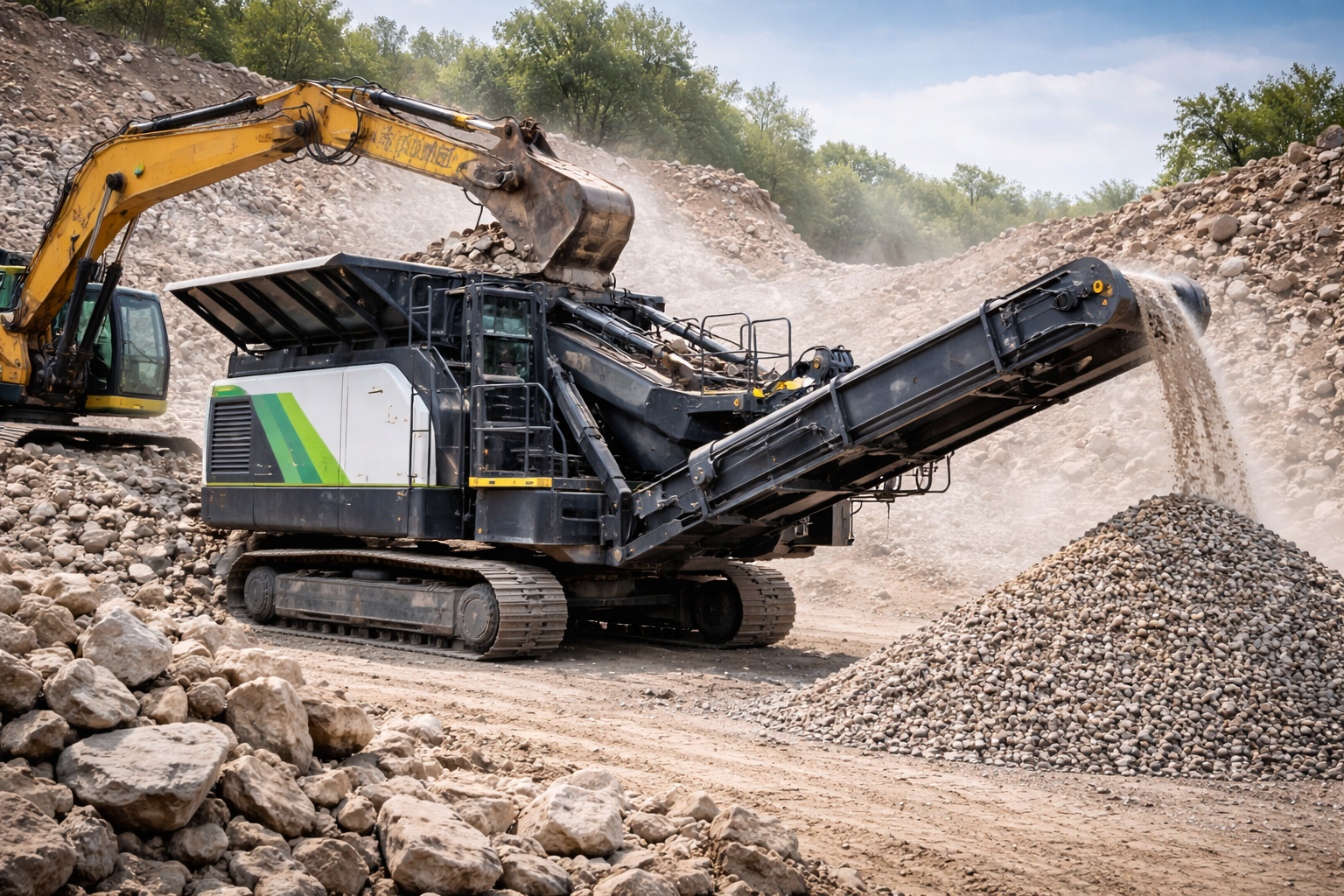
Stone Crusher – The Efficient Solution for Aggregate Production
A stone crusher is an essential machine in construction and quarrying. Whether for roads, foundations or industrial yards, the production of ballast and crushed stone has to be consistent and controlled.
Many contractors choose to invest in an aggregate crusher to cut costs and become independent of aggregate suppliers. Instead of buying ready-processed material, they can turn raw rock into finished product directly on site or in the quarry.

Why choose a stone crusher?
The main advantage of an aggregate crusher is efficiency. The machine quickly processes hard rock into ballast or aggregates with a controlled grain size.
Key benefits:
- Lower ballast production costs
- Control over the size of the crushed stone
- Less material haulage
- The option to recycle demolition waste
A well-chosen stone crusher can completely change the way you manage materials on site.
Types of crushers used in production
Depending on the type of rock and the result you want, you can choose:
- Jaw crusher – ideal for the primary crushing stage
- Impact crusher – suitable for uniformly shaped aggregates
- Cone crusher – used for fine gradations
Whichever type you choose, the goal is the same: turning raw rock into crushed stone or ballast ready for use.
What to check in a stone crusher
When choosing a stone crusher, it is important to consider:
- Hourly production capacity
- The type of material processed (limestone, granite, river gravel)
- Fuel consumption and maintenance costs
- Spare parts availability
A reliable machine keeps your production running and ensures a steady flow of aggregates for your projects.
Mobile or stationary crusher?
If you work on several sites, a mobile stone crusher is a practical solution. You can move it quickly and produce ballast right on the spot.
For a permanent quarry, a stationary plant can deliver higher output and lower costs in the long run.
Types of stone processing equipment
There are several options on the market, and the choice depends on the type of material and the output you need.
1. Jaw crusher
Ideal for the primary crushing stage. It is used for hard stone and large pieces of rock. It delivers good productivity and high durability over time.
2. Impact crusher
Suitable for producing ballast with a more uniform shape. It is common on sites where a precise gradation is required.
3. Cone crusher
Recommended for the secondary or tertiary stage, when a fine gradation is needed for asphalt or concrete.
Each type has its own advantages, and combining them into a complete production line can significantly increase efficiency.
What to check before buying a stone crusher
Before you choose a machine for crushing aggregates, consider:
- Hourly production capacity
- Material type (limestone, granite, river gravel, etc.)
- Fuel consumption
- Maintenance costs
- Spare parts availability
A high-performance machine is not just about raw power – it is also about reliability. A machine that sits broken down at the height of the season can cause serious losses.
Conclusion
Investing in a stone crusher makes sense when you have a steady workload and an ongoing need for aggregates. Instead of depending on suppliers, you can produce ballast and crushed stone in-house and boost the profitability of your business.
I also recommend reading other articles, such as:
Construction Machinery Bucharest – Professional Solutions
